Step 1
Contain the affected area.
24-Hour Response | North Miami Beach, FL
Sewage backups need more than drying. They need safe cleanup and sanitation. Cleanup and sanitation after toilet overflows, drain backups, and black water intrusion.
Call or text any time for emergency response, moisture inspection, and a clear next step.
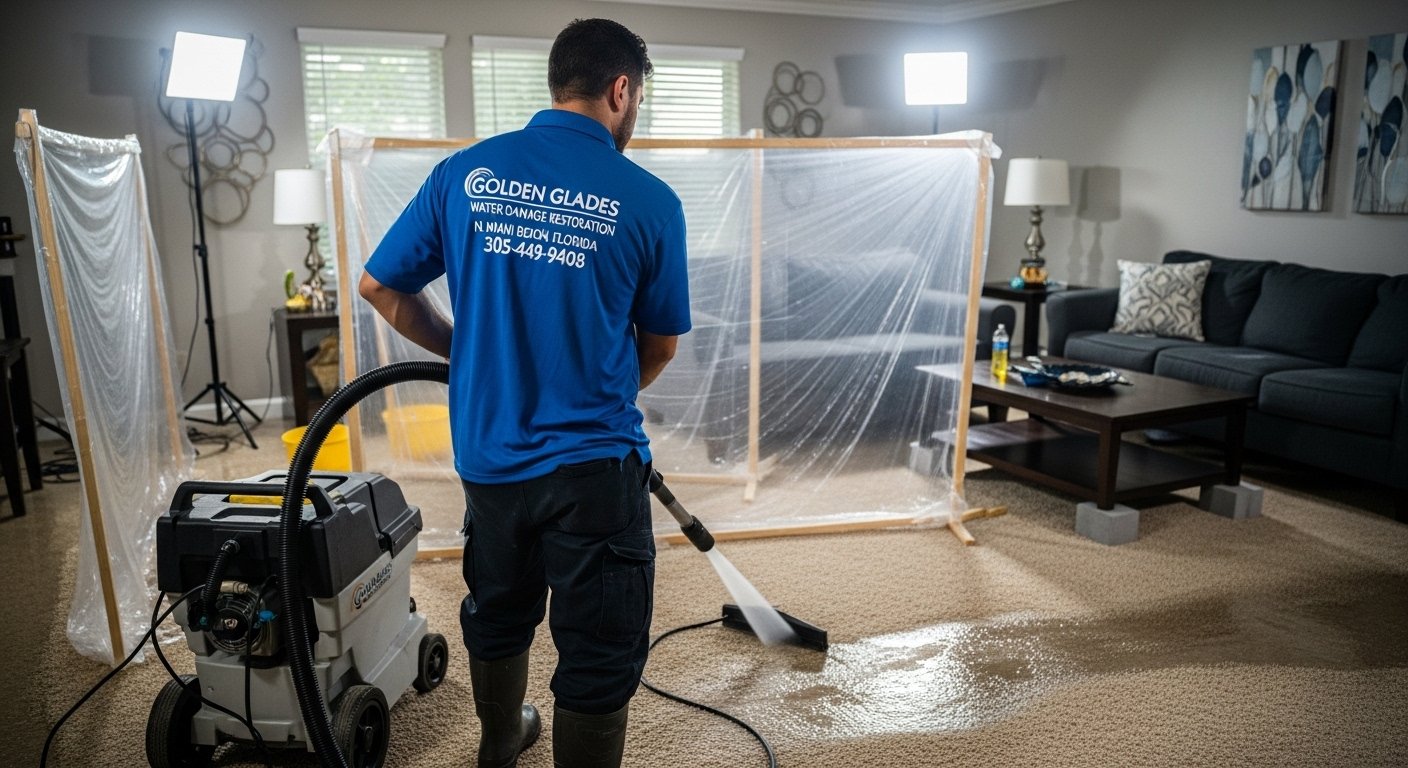
Sewage Cleanup in North Miami Beach, FL is not just about getting obvious water out of the room. In South Florida properties, water often moves under flooring, behind cabinets, through shared walls, and into ceiling cavities before the damage looks dramatic. That is why the first priority is understanding how the water traveled, what materials absorbed it, and what can still be dried safely.
Golden Glades Water Damage Restoration handles emergency cleanup with a practical approach. The crew focuses on stopping the spread, documenting what is wet, and building a drying plan that fits the property. In homes, that may mean protecting hardwood, drywall, and built-ins. In condos, it may mean coordinating access and documenting which areas belong to the unit and which involve the building. In commercial properties, the plan often has to balance cleanup with keeping part of the space operational.
North Miami Beach properties deal with roof leaks, AC issues, plumbing failures, storm-driven rain, and occasional street or drainage flooding. Each source leaves a different cleanup problem behind. Clean water from a supply line is different from stormwater, and both are different from sewage or black water. A proper response starts by treating the actual conditions on site rather than assuming every loss is the same.
Contain the affected area.
Remove contaminated water and waste.
Discard unsalvageable porous materials.
Clean and sanitize hard surfaces.
Dry and document the loss.
That sequence sounds simple, but the details matter. Drying equipment should match the space, wet materials should be checked instead of guessed, and progress should be monitored until moisture readings actually come down. In a humid coastal market like North Miami Beach, surface dryness can be misleading. Rooms may look normal while subfloors, insulation, and hidden framing still hold moisture.
The goal is not to keep equipment running longer than needed. The goal is to run the right setup for the right amount of time so the job ends cleanly. That often saves property owners from recurring odor, swollen materials, or mold growth a few weeks later.
Every loss is priced by conditions on site, not by a one-size-fits-all number. Smaller clean-water events are different from large contaminated losses, and a simple first-floor room is different from a condo unit with elevator scheduling and neighboring units involved.
Property owners usually get the clearest answer after the affected area is inspected, the source is identified, and the wet materials are mapped. That avoids both under-scoping and unnecessary work.
People usually call because they need a calm answer, not a speech. The team is available 24 hours, handles both homes and larger properties, and keeps the focus on practical decisions: what needs immediate attention, what can likely be saved, what may need to come out, and how to document the work clearly. The communication style is straightforward because water losses are stressful enough already.
Another reason local owners call is that this market is full of condos, mixed-use buildings, and tightly spaced neighborhoods where water moves beyond the original source fast. A small upper-floor leak can affect the unit below. A balcony intrusion can wet drywall and flooring before the owner even notices. That is why response plans here need both technical drying and clear coordination.
Golden Glades Water Damage Restoration provides sewage cleanup in North Miami Beach and throughout nearby areas including Aventura, Sunny Isles Beach, North Miami, Miami Shores, Bal Harbour, Golden Beach, Hallandale Beach, Hollywood, Pembroke Pines, Hialeah, Fort Lauderdale, and surrounding parts of Miami-Dade and Broward County.
Whether the loss is in a single-family home, condo tower, office suite, storefront, or managed property, the response is built around the actual building conditions and the urgency of the damage.
As soon as you see active water, spreading stains, or materials staying wet. Faster response usually means less demolition and a shorter drying timeline.
Yes. Many losses in this area involve condos, gated buildings, and managed properties, so access, elevator reservations, and after-hours rules are part of the planning.
Not always. The goal is to remove only materials that cannot be cleaned or dried properly and save what can realistically be restored.
Yes. Photo records, moisture readings, and notes about affected materials help property owners keep the loss documented clearly.
Minor losses may dry in a few days, while larger or more complex losses can take longer depending on material density, contamination, and how long the area stayed wet.
Yes. The business operates 24 hours because many water losses happen overnight, during storms, or when buildings are otherwise closed.
That changes the cleanup approach. The wet source still has to be solved, but affected materials may also need containment and proper mold remediation steps.
If it is safe, stop the source, avoid standing water near electrical hazards, move small valuables, and keep foot traffic out of the wet area.